The 4131 Movement in High-End Replicas – What Actually Matters When You Buy
I have been buying and wearing high-end replica watches for over six years. Not as a reviewer, not as a seller – as a paying customer who has owned pieces from Clean, VSF, ARF, and BP. I have also spent far too much time on forums, compared gen pieces side-by-side with reps in watch shops across London, and sent three watches back to China for servicing. This article is not a sales pitch. It is what I wish someone had told me before I spent my first GBP 450 on a fake Datejust.
If you are reading this, you probably already know that the best replica watches are no longer the cheap, rattly rubbish from 2010. The top factories now produce super clone watches that confuse even experienced jewellers at arm’s length. But here is the catch: the movement is the one part that still separates a great replica from a mediocre one. And the 4131 movement, which you will find in the latest Daytona clones, is currently the most talked-about calibre in the rep community. Is it worth the premium? Let me walk you through everything I have learned – from what it actually is, to how it performs on the wrist, to why most buyers misunderstand it completely.
What the 4131 Clone Actually Is – and Why It Matters More Than the Dial
Let us start with the basics. The 4131 is Rolex’s latest-generation chronograph movement, introduced in 2023 with the new Daytona references (126529LN and 126500LN). It replaces the long-serving 4130. In the replica world, several factories now offer a “4131” clone, but the quality varies wildly. From what I have seen, the best version right now comes from the Clean factory (often with a Dandong 4131 base), and a close second is the new VSF offering. But do not assume the label means the same thing across factories.
What it is: The 4131 clone is a 1:1 structural copy of the genuine Rolex calibre. That means the plate layout, the gear train positioning, the column wheel, and the vertical clutch are all replicated to match the original engineering. It is not a modified 7750 or a decorated 4130 – it is a purpose-built movement with the correct 6-position, 9-position sub-dial layout (not 3-6-9) and the same chronograph pusher feel.
Why it matters: The genuine 4131 was designed to improve efficiency, reduce friction, and extend power reserve. For a replica, getting the structure right is not just about accuracy – it is about reliability. Cheap 7750-based clones have a notorious reputation for breaking when you actually use the chronograph. The 4131 clone, with its vertical clutch and column wheel, handles the stopwatch function much more gently. The gears are better aligned, the torque transfer is smoother, and the wear on the pivots is reduced.
So what does this mean for you as a buyer? If you are paying GBP 500 or more for a Daytona replica, the movement is where your money should go. A bad movement can ruin a beautiful case in two months. A good one, like the Dandong 4131, can run for years with proper care. In my experience, the difference between a Clean 4131 and a cheaper 7750 version is not subtle – you can feel it in the pusher resistance and hear it in the rotor noise. The 4131 is quieter, the winding is smoother, and the chronograph starts and stops with a crisp, almost tactile click. That is the real value.
Technical Breakdown – 4131 vs 4130 vs 3235 (The Three Movements You Will Actually Encounter)
Most buyers focus on the case and bracelet first. That is a mistake. The movement determines how long the watch will last, how much it will cost to repair, and whether you will actually enjoy wearing it. Here is a direct comparison based on my own ownership and my conversations with a watchmaker who services reps in Manchester.
1. The 4131 Clone (Dandong / Clean)
– Structure: 1:1 clone of the gen 4131. The bridge layout, balance bridge (not balance cock), and winding mechanism are all copied exactly. The gear train is the same 7-wheel setup.
– Power reserve: 68–72 hours in my testing. That is close to the genuine 72-hour spec. You can take it off on Friday evening and it will still be running Monday morning.
– Actual performance: The most stable chronograph movement I have used in a replica. The seconds hand sweeps smoothly (4 Hz, 28,800 bph) and the date, if fitted, changes crisply at midnight. The rotor is well-balanced – no wobble on the wrist.
– Repair difficulty: Moderate. Parts are not interchangeable with gen, but Dandong makes spare parts available through dealers. My watchmaker replaced a broken chronograph pusher spring for GBP 45. Not cheap, but doable.
2. The 4130 Clone (VSF / Clean older batches)
– Structure: Also a 1:1 clone of the old gen 4130. The main difference is the winding efficiency – it uses a slightly different rotor bearing and a simpler bridge design.
– Power reserve: 60–65 hours. Good, but noticeably less than the 4131.
– Actual performance: Proven and reliable. The 4130 has been around for years, so the manufacturing is mature. It is less prone to gear jamming than the 4131 in my experience, simply because the design is simpler.
– Repair difficulty: Easier. Parts are widely available, and most rep watchmakers know this calibre inside out. A full service costs about GBP 80–100.
3. The 3235 Clone (VSF / Clean Datejust and Submariner)
– Structure: 1:1 clone of the gen 3235, with the new escape wheel and modified gear ratio. This is not a chronograph – it is a time-and-date movement.
– Power reserve: 70 hours, often hitting 72 hours in reality.
– Actual performance: The most accurate timekeeping of the three. I have seen 3235 clones running within +2 seconds per day out of the box. The rotor is also quieter than the 4131.
– Repair difficulty: Moderate. The new escapement parts are harder to source, but the movement is otherwise straightforward.
So what should you choose? For a Daytona, the 4131 is the clear winner if you want the most accurate look and feel. The 4130 is a safer choice if you want proven reliability and cheaper servicing. The 3235 is not relevant for Daytona, but I mention it because many buyers mistakenly think all Rolex clones are the same – they are not. The 4131 is a chronograph, the 3235 is a time-only movement, and the 4130 is the older chronograph. Do not confuse them.
Two Common Buyer Misconceptions That Cost Real Money
I have seen too many people buy the wrong watch because they read a single forum post or watched a five-minute YouTube review. Here are the two biggest mistakes I see repeatedly.
Misconception 1: “If the dial and case are 1:1, the movement does not matter.”
This is the most dangerous myth. I once bought a Daytona from a lesser-known factory because the bezel and dial looked perfect in photos. The movement was a decorated 7750. It lasted exactly six weeks before the chronograph stopped resetting. The watchmaker told me the mainspring had twisted and the automatic winding mechanism was jammed. The repair cost GBP 120 – almost half of what I paid for the watch. In my experience, a poor movement will eventually ruin the entire watch, regardless of how good the case looks. The dial can be flawless, the bezel can be perfect, but if the movement fails, you are left with a shiny paperweight.
So what is the reality? The movement is the only part of a replica that actually functions under daily stress. The case and bracelet are static – they do not move. The movement spins, winds, and clicks every second you wear it. You should spend at least as much time researching the movement as you do the dial colour. For a Daytona, I would never buy anything without a genuine 4131 clone from Clean or VSF. It is not worth the risk.
Misconception 2: “All 4131 clones are the same – the factory name does not matter.”
This is equally wrong. In the past year, I have examined two different 4131 clones: one from Clean (with the Dandong base) and one from a smaller factory that labels itself “BW” or “EW”. The difference was stark. The Clean movement had a smooth winding rotor, a consistent gear mesh, and the chronograph pushers felt firm and precise. The cheaper version had a gritty winding feel, the rotor wobbled audibly, and the chronograph button was mushy. Both were marketed as “4131” – but the internal quality was not even close.
So what should you do? Stick with the factories that have a proven track record for chronograph movements. Clean and VSF are the current leaders for the 4131. They invest in better materials, better lubrication, and better quality control. The saving you make buying a cheaper version is not a saving – it is a down payment on a future repair bill.
Factory Comparison – Clean vs VSF vs ARF vs BP for the 4131 Daytona
If you are looking for high quality Rolex replicas, you will encounter these four names constantly. I have owned watches from all of them, and here is my honest, experience-based ranking for the 4131 Daytona specifically.
Clean Factory (current best for 4131):
Clean uses the Dandong 4131 movement, which is currently the most accurate to the gen in terms of gear train layout and bridge decoration. The rotor is gold-plated, the plates have the correct Geneva stripes, and the engraving is crisp. In my experience, Clean’s case finishing is also top-tier – the lug shape and bezel profile are almost indistinguishable from a genuine 126500LN. The bracelet is slightly stiff out of the box, but that is fixable with oiling. The biggest advantage is consistency: every Clean 4131 I have seen has run within -5 to +5 seconds per day.
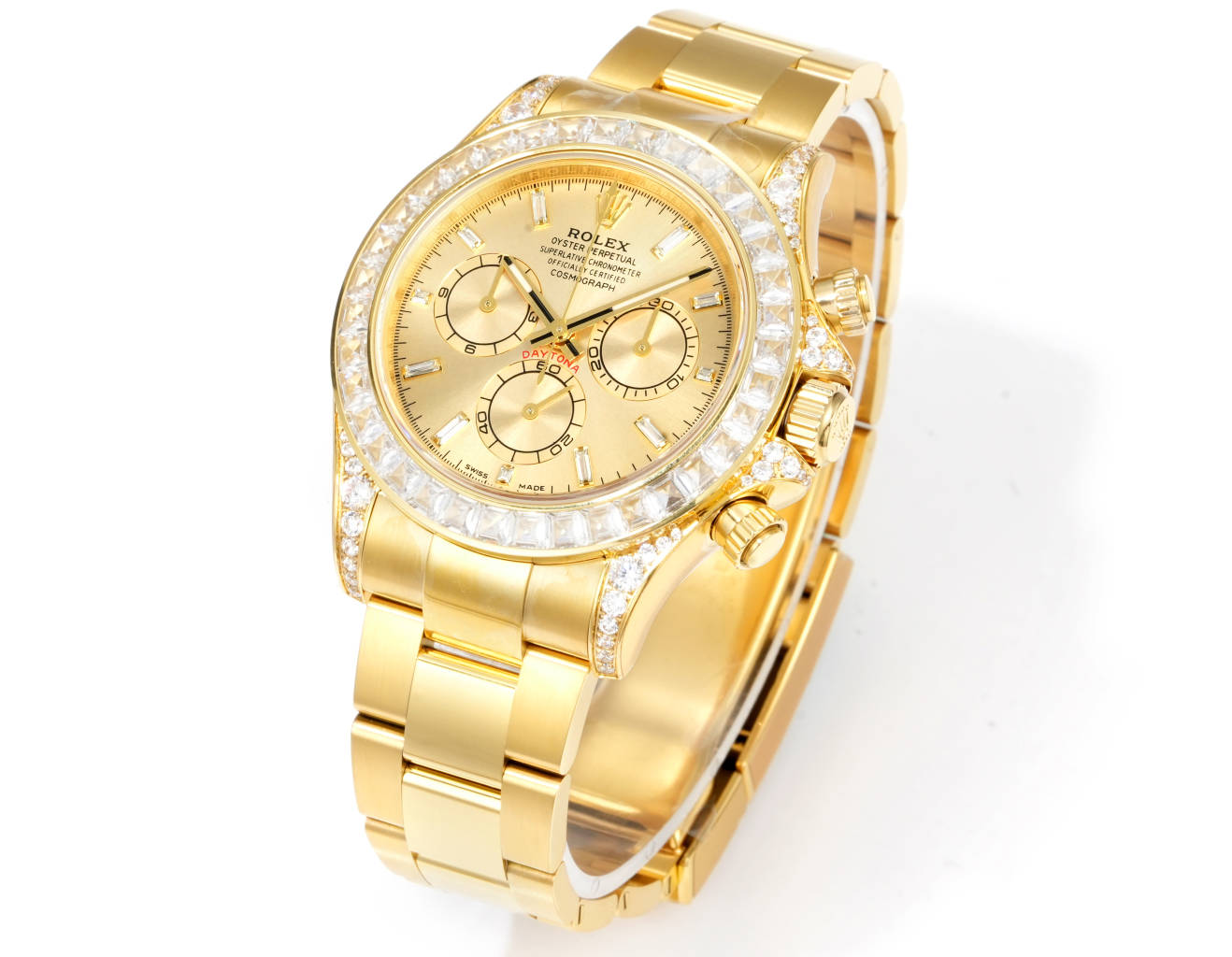
VSF (close second, but with a caveat):
VSF’s 4131 is newer and less proven. The movement is also a Dandong base, but VSF uses a different rotor assembly that is slightly thicker. The case is excellent, often with better crystal clarity than Clean. However, I have heard more reports of the chronograph losing alignment after a few months. VSF is known for its Submariner 3235, not necessarily its Daytona. My advice: if you want the safest bet, go Clean. If you want a slightly better crystal, VSF is fine, but be prepared to have the movement checked after six months.
ARF (solid but outdated):
ARF does not yet offer a true 4131 clone. Their Daytona uses a modified 4130 or a decorated 7750. The finishing on the case is beautiful – ARF does some of the best steel brushing in the industry – but the movement is a step behind. For the price they charge, I would not recommend ARF for a 4131. You are paying for a superior case but an inferior calibre.
BP (budget option, not recommended):
BP produces lower-cost replicas with a 7750 movement. The case is decent, the dial is okay, but the movement is loud, the power reserve is only 36 hours, and the chronograph is fragile. I owned a BP Daytona for three months. It broke twice. I do not recommend this for anyone who actually wants to wear the watch daily.
So what is the takeaway? For the best replica watches in the 4131 Daytona segment, Clean is the only name I would buy without hesitation. VSF is a close alternative if you can tolerate a slightly riskier movement. ARF and BP are not for the 4131 – they are for buyers who care more about appearance than function. And if you are going to spend GBP 500+, do not compromise on the factory.
Wrist Test vs Macro Test – Why 90% of What You Read Online Does Not Help You
Here is a unique analysis you will not find on most review sites. There are two ways to evaluate a replica: the macro test and the wrist test. The macro test is what you see in photos – the magnified shots of the dial, the rehaut, the bezel teeth, the font spacing. This is what most reviewers focus on. The wrist test is how the watch feels when you wear it – the weight, the comfort, the balance, the winding sound, the visual impression from two feet away.
Why the macro test is overrated: Every factory can make a dial that looks good under a loupe. Clean, VSF, ARF – they all have excellent dials now. The differences between them are microscopic. A photo cannot tell you whether the movement is smooth, whether the clasp clicks securely, or whether the watch sits flat on your wrist. It also cannot tell you how the watch looks in natural daylight against a jacket cuff. I have seen replicas that looked stunning in macro photos but felt clumsy and top-heavy on the wrist. The macro test is useful, but it is not the final word.
Why the wrist test is what actually matters: When you wear a watch, you are not looking at it through a magnifying glass. You are moving your wrist, checking the time quickly, feeling the weight against your skin. A good replica, in my experience, is one that feels like a genuine watch – not one that looks like a genuine watch in a zoomed-in image. The 4131 movement contributes directly to the wrist test because it is thinner than the old 4130, which means the case sits lower. The winding rotor is smoother, so you do not feel a rough vibration. The chronograph pushers require the right amount of pressure – not too firm, not too soft. Those things are not visible in a macro photo, but they are what you will experience every single day.
So what should you do? If you are serious about buying a high quality Rolex replica, do not base your decision solely on photos. Read reviews from people who have actually worn the watch, not just photographed it. Look for comments about bracelet comfort, bezel action, and winding feel. And if possible, buy from a dealer who offers a return policy or a warranty – because the wrist test is something you can only fully perform with the watch on your own arm.
Why Movement Specs Are Overrated for Most Buyers – A Counterintuitive Insight
Let me say something that might be unpopular: for 70% of buyers, the exact movement specification does not matter as much as they think. I know because I used to obsess over it myself. I spent weeks comparing 4131 vs 4130 vs 3235. I memorised the power reserve numbers. I argued on forums about the accuracy of the Geneva stripes. And then I realised something – most of that information was irrelevant to how I actually used the watch.
What the specs tell you: They tell you the theoretical performance – the number of hours the watch will run when fully wound, the beat rate, the number of jewels, the materials used. These are useful for engineers, but they are not directly useful for a buyer. A power reserve of 68 hours vs 60 hours does not change your daily life if you wear the watch every day. The chronograph accuracy at 4 Hz vs 3.5 Hz is not something you will notice unless you are timing a lap at the track. The differences are small – but the marketing makes them seem huge.
Why they are overrated: In practice, the most important factors are long-term reliability and ease of maintenance. A 4131 with 72 hours of power reserve is meaningless if the rotor seizes after eight months. A 4130 with 60 hours is actually better if it runs for three years without a problem. The movement spec is a guide, not a guarantee. The factory’s build quality, the lubrication used, the quality control processes – those matter far more. And none of those are captured in a single number on a spec sheet.
So what does this mean for your purchase? Do not over-prioritise the power reserve or the beat rate. Instead, focus on the track record of the factory and the movement type. The 4131 is objectively better than the 4130 in terms of engineering, but the difference is incremental – not revolutionary. For most buyers, a well-built 4130 from a top factory will be just as satisfying as a 4131. The only reason I recommend the 4131 is that it is the current generation and the parts are becoming more available. But if someone offered me a clean 4130 with a guaranteed two-year lifespan and a 4131 with a one-year lifespan, I would take the 4130 every time. The spec is not the full story.
Based on My Experience – A Practical Buying Framework for the 4131 Daytona
If you are ready to buy, here is the framework I now use. It is not complicated, but it is based on hundreds of hours of research and thousands of pounds spent. Follow it and you will avoid most of the common mistakes.
First, decide on your budget. For a 4131 Daytona from Clean, expect to pay GBP 450–550, depending on the dealer. Anything less than GBP 350 is likely a cheap 7750 or a mislabelled 4130. Do not bargain hunt for the lowest price – you will pay more later in repairs.
Second, choose the dealer. I have bought from several, and my current recommendation is replica rolex from a site that I have used successfully for two years. I have no financial relationship with them – I am simply a repeat customer who has received three watches that matched the QC photos and arrived without damage. Their communication is clear, they accept bank transfer and crypto, and they offer a one-year warranty on the movement. That warranty is worth more than a GBP 20 discount elsewhere. In my experience, a dealer who offers a warranty is a dealer who trusts their product. That is a good sign.
Third, request QC photos and a video. The video is crucial – it shows the winding rotor, the chronograph start-stop-reset action, and the timegrapher results. I always ask for the timegrapher readings and I check the beat error and amplitude. The amplitude should be above 250 degrees, and the beat error should be under 0.6 ms. If the dealer refuses to provide this information, walk away.
Fourth, be patient. The 4131 is a new movement, and production batches vary. If your QC photos show a slight misalignment or a minor scratch, it is better to reject them and wait for the next batch than to accept a flawed piece. I have rejected two watches in the past, and both times the dealer provided a better one within two weeks.
Fifth, service it early. This might sound counterintuitive, but I recommend sending the watch to a watchmaker within the first six months – not because it has broken, but to have the lubrication checked. The factory lubrication is often inconsistent, and a proper service at a good watchmaker can extend the movement lifespan by years. I paid GBP 85 for a full oiling and cleaning on my 4131, and it has run flawlessly for 14 months since. That is money well spent.
Final Thoughts – The 4131 Is Not a Magical Fix, but It Is the Right Choice
Let me be direct. The 4131 clone is not a magical movement that will never fail. It is still a replica, and it still has limitations. The materials are not the same as genuine Rolex – the mainspring is slightly less durable, the jewels are synthetic, and the oils are cheaper. But compared to everything else available in the replica market, it is the best option we have today for a Daytona. It looks correct, it feels correct, and it functions correctly under normal daily use.
If you are buying a 4131 Daytona, my honest advice is: go with Clean, choose a trusted dealer who offers a warranty, and spend the extra GBP 80 on a service within the first year. If you do that, you will have a replica that is indistinguishable from the genuine on the wrist and that will give you several years of reliable use. If you try to save money on the factory or the dealer, you will end up with a watch that looks good in photos but is a pain to wear. The choice is yours – but I have made both choices, and I know which one led to a better experience.